
 By
By 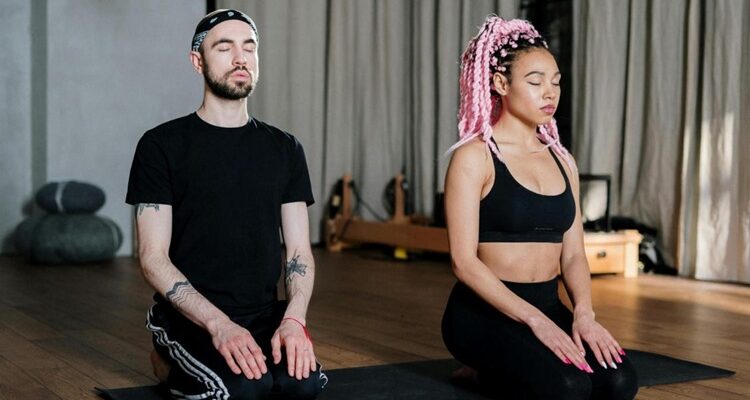
Something fundamental is changing in how people think about their health.
Not just what they eat or how much they exercise. But the entire framework through which they understand what health actually is and how it is created and maintained.
For most of the 20th century, healthcare meant treating illness. You felt sick, you saw a doctor, you received treatment. Health was the absence of disease and medicine was what you used when it was absent.
In 2026, that framework is rapidly becoming obsolete.
A growing body of research, combined with a cultural shift accelerated by the pandemic years and the chronic stress epidemic that followed, is driving millions of people toward a fundamentally different model.
One in which health is actively created through daily lifestyle practices rather than passively maintained until treatment becomes necessary.
At the centre of this shift are two ancient practices that modern science is only now beginning to fully understand: yoga and meditation.
The Chronic Disease Crisis That Is Driving the Shift
The statistics are sobering.
According to the Centers for Disease Control and Prevention, six in ten Americans live with at least one chronic disease.
Four in ten live with two or more. Chronic conditions including heart disease, diabetes, obesity, anxiety disorders, and depression account for 90% of the United States’ annual healthcare expenditure.
These are not primarily genetic conditions. They are primarily lifestyle conditions — produced and sustained by the specific patterns of modern daily life.
Chronic stress, poor sleep, sedentary behaviour, inflammatory diet, social isolation, and the relentless overstimulation of the digital environment are the upstream conditions in which most chronic disease develops.
Treating these diseases after they appear is expensive, difficult, and often produces partial results. Preventing them from developing in the first place is considerably more effective and considerably less costly.
This is the opportunity that preventive healthcare is pursuing. And yoga and meditation are proving to be among its most powerful tools.
What the Science Is Confirming
The research base has reached a tipping point.
A 2019 meta-analysis published in the European Journal of Preventive Cardiology analysed 37 randomised controlled trials and found that yoga significantly reduced blood pressure, heart rate, and LDL cholesterol — with results comparable to moderate aerobic exercise [https://academic.oup.com/eurjpc/article/26/9/1000/5925230].
A landmark study published in JAMA Internal Medicine confirmed that mindfulness meditation produced significant reductions in anxiety, depression, and chronic pain across clinical populations, with effect sizes comparable to antidepressant medication for mild to moderate presentations [https://jamanetwork.com/journals/jamainternalmedicine/fullarticle/2724391].
Research from Harvard Medical School has documented measurable changes in gene expression following regular meditation practice — specifically in genes associated with inflammation, immune function, and cellular aging. These are not subjective wellness outcomes. These are molecular changes in how the body operates at the most fundamental level.
The scientific community is not embracing yoga and meditation because they are fashionable. It is embracing them because the evidence demands it.
Why Now — What Has Changed in 2026
Several converging forces have accelerated the mainstream adoption of these practices in recent years.
The post-pandemic nervous system crisis. The collective experience of sustained uncertainty, isolation, and threat between 2020 and 2023 left millions of people with measurably dysregulated nervous systems.
Anxiety disorders, sleep dysfunction, chronic fatigue, and inflammatory conditions all increased significantly. Conventional medicine, stretched to its limits, had few tools for addressing this scale of nervous system dysregulation. Yoga and meditation did.
The failure of the optimisation model. The wellness industry of the 2010s was built around optimisation — biohacking, tracking, supplementing, and engineering every aspect of health for maximum performance.
By the mid-2020s, the backlash was significant. Optimisation fatigue, combined with the growing awareness that no supplement stack addresses chronic stress at the root, drove a cultural shift toward practices that work with the body’s natural intelligence rather than trying to override it.
The growing evidence base. The research published over the past decade has made it increasingly difficult for mainstream medicine to dismiss yoga and meditation as complementary extras.
When randomised controlled trials published in the New England Journal of Medicine and JAMA confirm clinical outcomes, the conversation changes.
The accessibility revolution. Online platforms, apps, and community programmes have made quality yoga and meditation instruction available to populations that previously had no access.
The practices have moved from speciality studios to living rooms, hospital waiting areas, corporate wellness programmes, and school curricula.
How Yoga and Meditation Work as Preventive Interventions
Understanding why these practices produce clinical outcomes requires understanding the autonomic nervous system.
The autonomic nervous system governs every involuntary function of the body. It operates in two primary modes — sympathetic activation for action and threat response, and parasympathetic activation for rest, repair, and restoration.
Chronic disease is almost universally associated with chronic sympathetic dominance. The nervous system stays stuck in activation mode, producing a continuous stream of stress hormones and inflammatory signals that, over time, damage cardiovascular tissue, impair metabolic function, suppress immune response, and accelerate cellular aging.
Yoga and breathwork are among the most direct non-pharmacological interventions available for restoring parasympathetic tone.
Slow diaphragmatic breathing directly stimulates the vagus nerve — the primary pathway of the parasympathetic nervous system — producing measurable reductions in cortisol, heart rate, blood pressure, and inflammatory markers within a single session.
Dedicated pranayama and meditation courses teach this complete system of breath regulation — not as a relaxation technique but as a precise physiological intervention with documented clinical outcomes, practiced within the traditional framework that developed these tools over thousands of years of careful observation and refinement.
Practiced consistently, these interventions do not just produce temporary relief. They recalibrate the nervous system’s baseline shifting the default physiological state from chronic activation toward genuine equilibrium.
The Role of Traditional Training in the Modern Health Movement
As yoga and meditation move into mainstream healthcare, an important distinction is emerging between surface-level practice and genuine traditional training.
A yoga class at a fitness studio offers real benefits. But the complete traditional system integrating asana, pranayama, philosophical understanding, Ayurvedic lifestyle, and sustained self-inquiry produces a fundamentally different quality of health transformation.
For individuals, healthcare professionals, and wellness practitioners who want to understand this complete system, yoga teacher training in Rishikesh offers exactly this depth.
Not just techniques but the complete science of why these practices work, how they interact with each other, and how to apply them intelligently across different constitutions, conditions, and life stages.
The mainstream adoption of yoga and meditation is not a trend. It is a correction a course adjustment in a healthcare model that has focused almost exclusively on treatment while neglecting the upstream conditions that determine whether treatment is ever needed.
The ancient practitioners who developed these systems understood something that modern medicine is arriving at through a different route: that the most powerful healthcare intervention available is a daily practice that keeps the nervous system regulated, the body in balance, and the mind clear enough to support both.





Comments